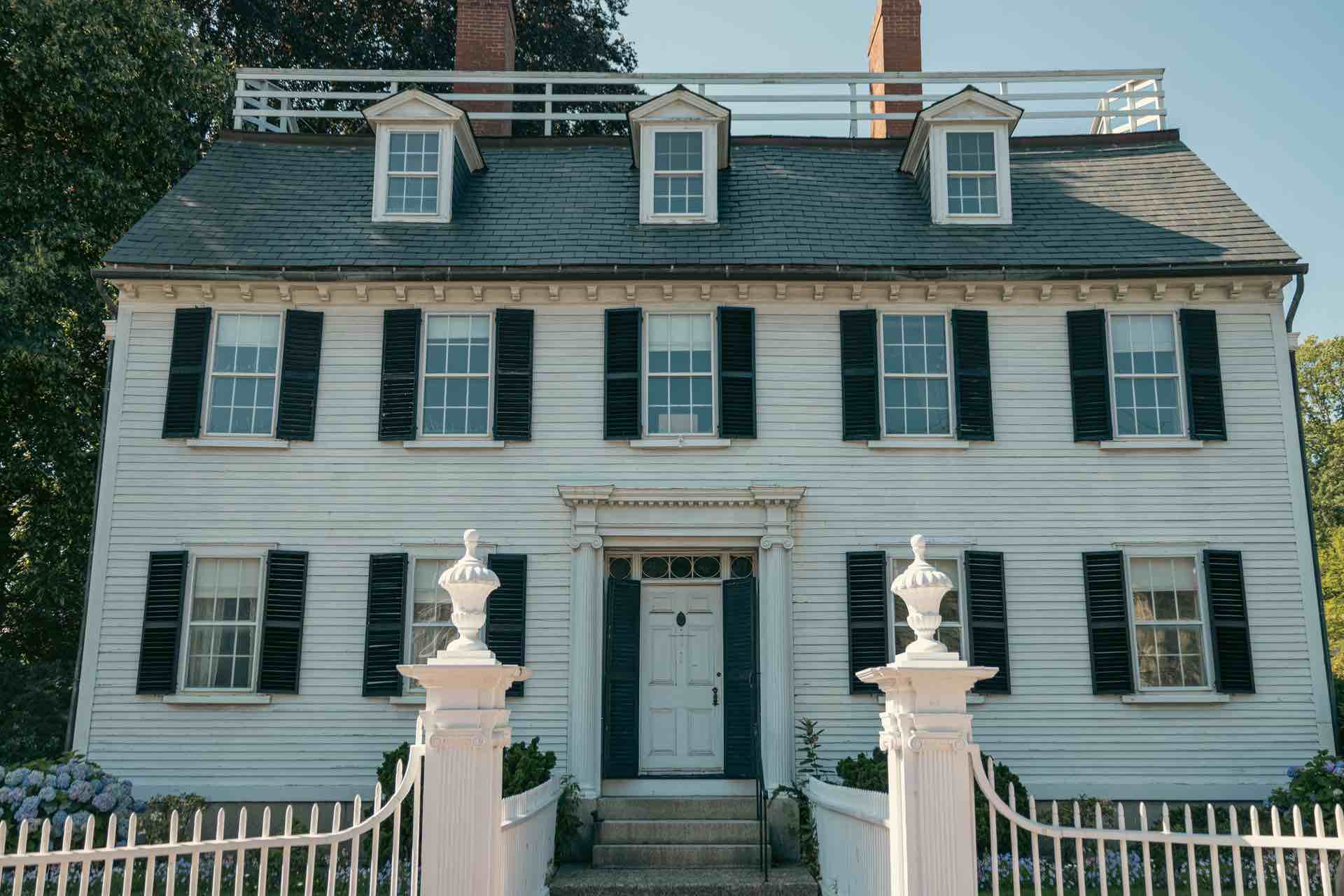
Two Different Housing Stocks, One Borough Name
Walk the historic core of West Chester and you’re standing among homes built before synthetic stucco existed as a product. Brick, stone, wood clapboard. None of that applies to what’s happening a few minutes outside the borough line.
The stucco problem lives in the townships that ring the borough, wherever the 1990s and 2000s building boom put up colonial and Georgian-style production homes along the roads feeding into town. That’s the housing stock built between 1993 and 2006 at the center of SE Pennsylvania’s stucco defect crisis. We cover the construction mechanics behind that era on our stucco failure page, but the short version is bad flashing details and no drainage plane behind a moisture-trapping wall system.
What You See
Hairline cracking around window corners. Dark staining below window sills. Soft spots near the foundation line or where a deck or porch roof ties into the wall. Sometimes nothing visible at all, which is exactly why an inspector’s moisture meter reading matters more than what the wall looks like from the driveway.
What’s Actually Causing It
Most West Chester-area cases we look at trace back to the same handful of details: window and door flashing installed backward or skipped, no weep screed at the base of the wall, stucco applied directly over house wrap with no air gap behind it. We walk through moisture testing itself on our testing page. Here it’s enough to know a reading well above normal in the wall sheathing usually means active water intrusion, not a cosmetic issue.
A Typical Township Case
A colonial in one of the townships just outside the borough, built in the late 1990s, hard-coat stucco over OSB sheathing. Nobody knew there was a problem until the buyer’s inspector pulled moisture readings at three window corners during the sale. The seller’s first quote, from a general contractor, was for a full tear-off. Our evaluation found the active damage was contained to the window and chimney flashing details, a partial remediation instead of a full one. That split is common in this housing stock: the wall system was installed the same flawed way everywhere, but active damage usually concentrates at a handful of penetrations, not the whole facade.
What It Costs
Targeted repair at a few penetration points runs $3,000 to $12,000. Partial remediation, tearing off and rebuilding compromised sections while leaving sound stucco in place, runs $15,000 to $40,000. Full remediation on a house where the damage has spread runs $40,000 to $90,000 or more. Our cost guide breaks down what pushes a job into each tier.
If You’re Holding an Inspection Report
Send it to us. We’ll read the moisture readings and the inspector’s notes and tell you, in plain language, what the report actually means and what fixing it should cost. One business day, no obligation. If you’d rather have someone look at the house directly, request a free site evaluation and we’ll walk the exterior with a moisture meter ourselves.