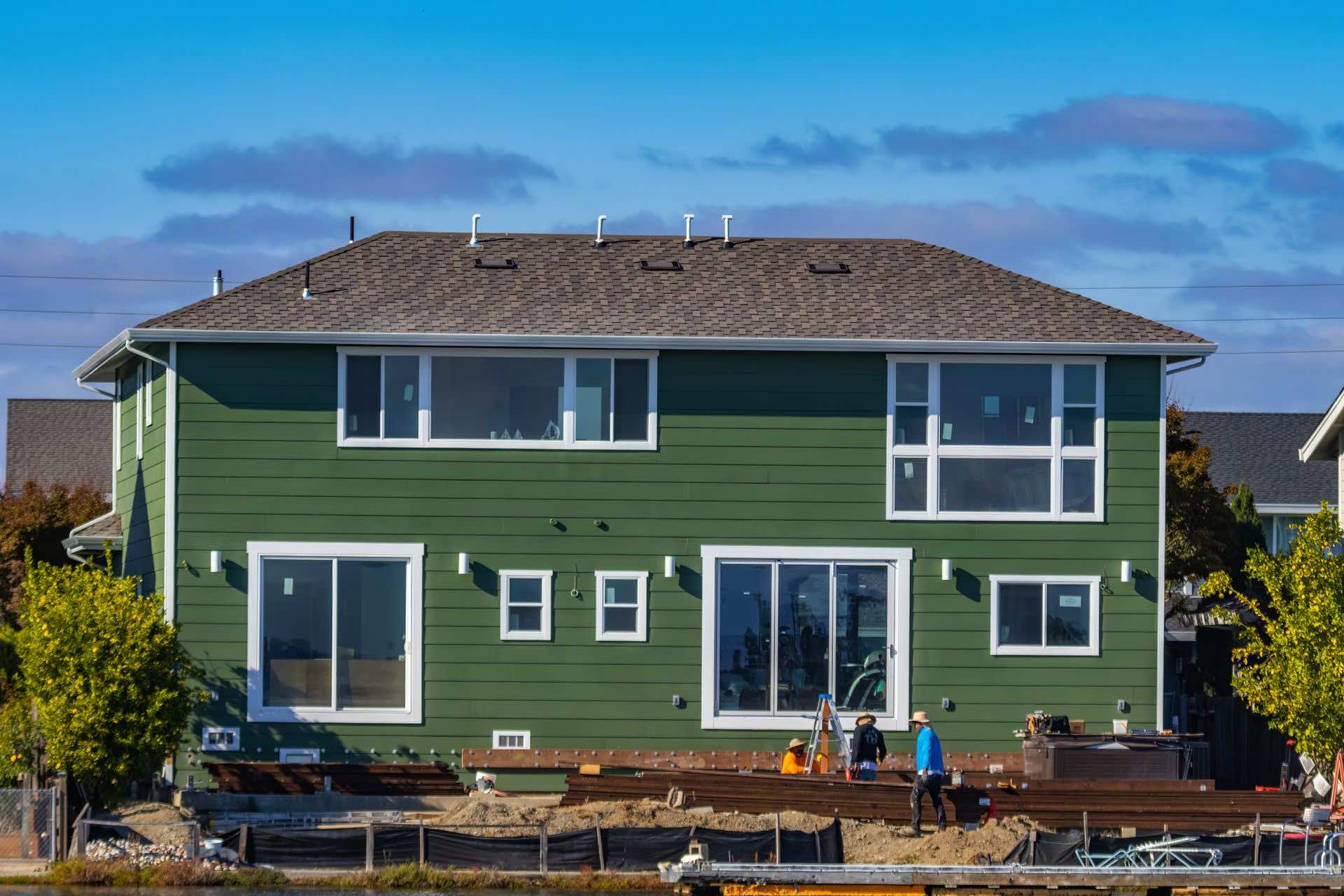
Once the wall is open, you get to choose what goes back up. That choice matters more than most homeowners realize.
Full remediation means the stucco is already coming off, down to the sheathing, on every affected elevation. At that point you’re not choosing between “fix it or don’t.” You’re choosing what cladding goes back on a wall that’s already stripped bare. Re-stucco it, or convert to fiber cement siding. Both are legitimate. They are not equally forgiving.
Why re-stuccoing is a bet on perfect execution, twice
The reason your walls failed the first time almost always traces back to a handful of installation details done wrong: no weather-resistant barrier, missing or improperly lapped kickout flashing, no control joints to let the assembly move without cracking. Stucco itself isn’t the flaw. The install was.
Put new stucco back up and you’re depending on every one of those same details getting executed correctly this time, on every elevation, by every crew member, on every rainy Tuesday for the life of the house. That’s not a knock on stucco as a material. It’s an honest statement about how many ways a stucco install can go wrong even when the crew knows what they’re doing, and how little margin the assembly gives you if any one detail slips.
Why fiber cement is more forgiving, not more magic
Fiber cement siding installed over a proper weather-resistant barrier tolerates incidental moisture in a way a monolithic stucco assembly doesn’t. Lapped siding sheds water by design, the way it’s been shedding water on houses for a century. If a flashing detail is slightly imperfect somewhere, the consequences are usually smaller and more localized than they are behind a stucco skin that can trap water against the sheathing for years before anyone notices.
This isn’t a claim that fiber cement never fails. It can, especially with bad install work of its own. It’s a narrower claim: a properly installed WRB and lapped siding assembly has more built-in tolerance for the small mistakes that happen on every job site, and less capacity to hide a big problem for a decade before it surfaces.
What “James Hardie certified installer” actually means
It means the installer has gone through Hardie’s training program on their specific installation requirements, fastening patterns, clearances, and flashing details, and that Hardie stands behind the workmanship warranty when the install follows those specs. It’s not a marketing sticker. It’s a manufacturer’s own bet on a specific crew’s install quality, backed by a warranty that only holds if the details were actually followed. In a market where bad installation details are the entire reason you’re standing in front of a remediation quote in the first place, that distinction is worth something real.
The tradeoffs, honestly
Converting to fiber cement during remediation is not automatically cheaper than re-stuccoing, and it’s not automatically the right call for every house.
- Cost. Material and labor costs between quality fiber cement and re-stucco are often comparable once you’re already doing a full tear-off. The bigger cost driver is scope, how much of the house is affected, not which cladding goes back up.
- Appearance. Stucco has a texture and a monolithic look that fiber cement lap or panel siding doesn’t replicate. On a Colonial or a French-inspired production build from the 1990s and 2000s, this is usually a non-issue, that architecture reads fine in either material. On a genuinely Mediterranean or Tudor-style home where stucco is part of the architectural intent, converting to siding changes the character of the house, and that’s worth sitting with before deciding.
- HOA and historic-district rules. Some developments in Chester and Montgomery counties have HOA covenants specifying stucco or a matching exterior finish. Some SE Pennsylvania boroughs have historic-district review for exterior changes. Both of those can restrict or outright block a conversion regardless of what makes the most technical sense. This has to be checked before a design decision gets made, not after.
A typical case
A stucco-clad development home in Montgomery County, full remediation triggered by a pre-sale inspection that found moisture on three of four elevations. No HOA restriction on this particular development, no historic overlay. The homeowner weighed a full re-stucco against conversion and went with James Hardie fiber cement, mainly because they were planning to sell within five years and didn’t want a second stucco assembly’s failure risk following them into that sale. The finished look reads clean and contemporary on a house style that never depended on stucco’s texture to look right in the first place. Not every house is that straightforward. This one was.
Figuring out which call is right for your house
This decision only makes sense in the context of your specific walls, your specific architecture, and whatever HOA or historic rules apply to your address. Send us your inspection report. We’ll tell you what it actually means, and what fixing it, in either material, should cost. One business day.